Het leven bij Mano
The engine behind the new AFO line

Sjaak Smakman
“I still see so many opportunities to do even better.”
A conversation with Vincent Laagland
New scanner
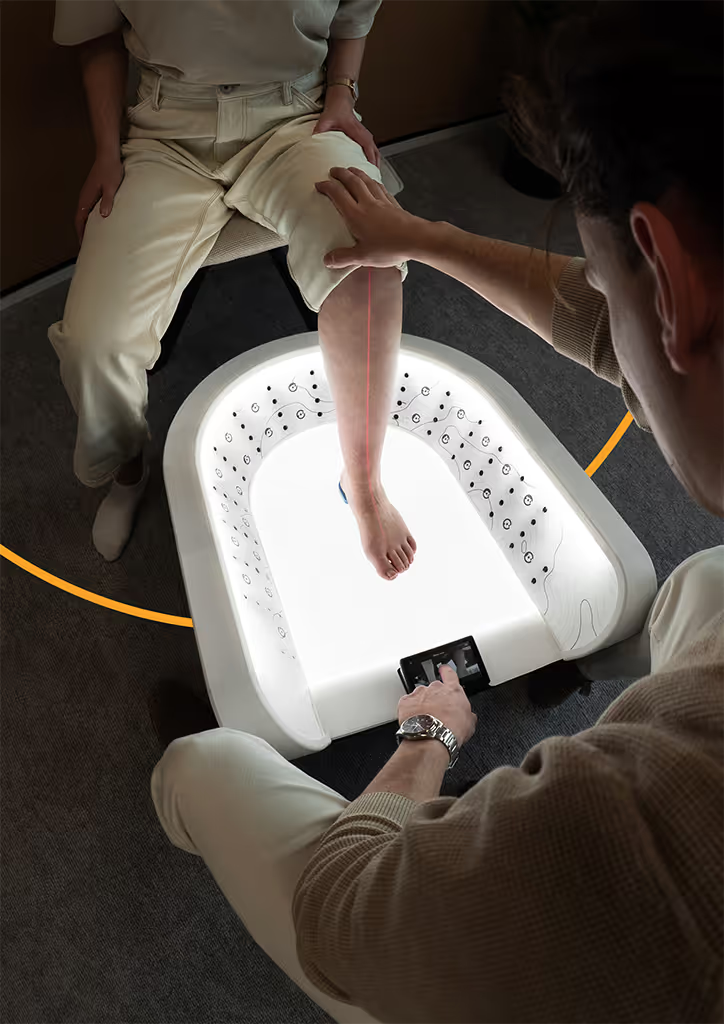
It is still only a prototype, emphasises Vincent Laagland, referring to the brand-new scanner for ankle and foot orthoses (AFO). But at the same time, it is already so good that the patent application has been submitted. “Our own orthopaedic instrument makers said it would never be possible to fit ankle and foot orthoses in one go. But in 95 out of 100 cases, we are already succeeding,” says the enthusiastic product manager. “And we are still learning. Every AFO we make is better than the last.”
Vincent is the driving force behind the project that started just over a year and a half ago: orthoses for ankles and feet that, just like hand braces, enable people to do the things they love again. Not an easy task, partly because ankles and feet are subject to very different and much greater forces than hands. But now, a year later, that problem has also been tackled.
Composite
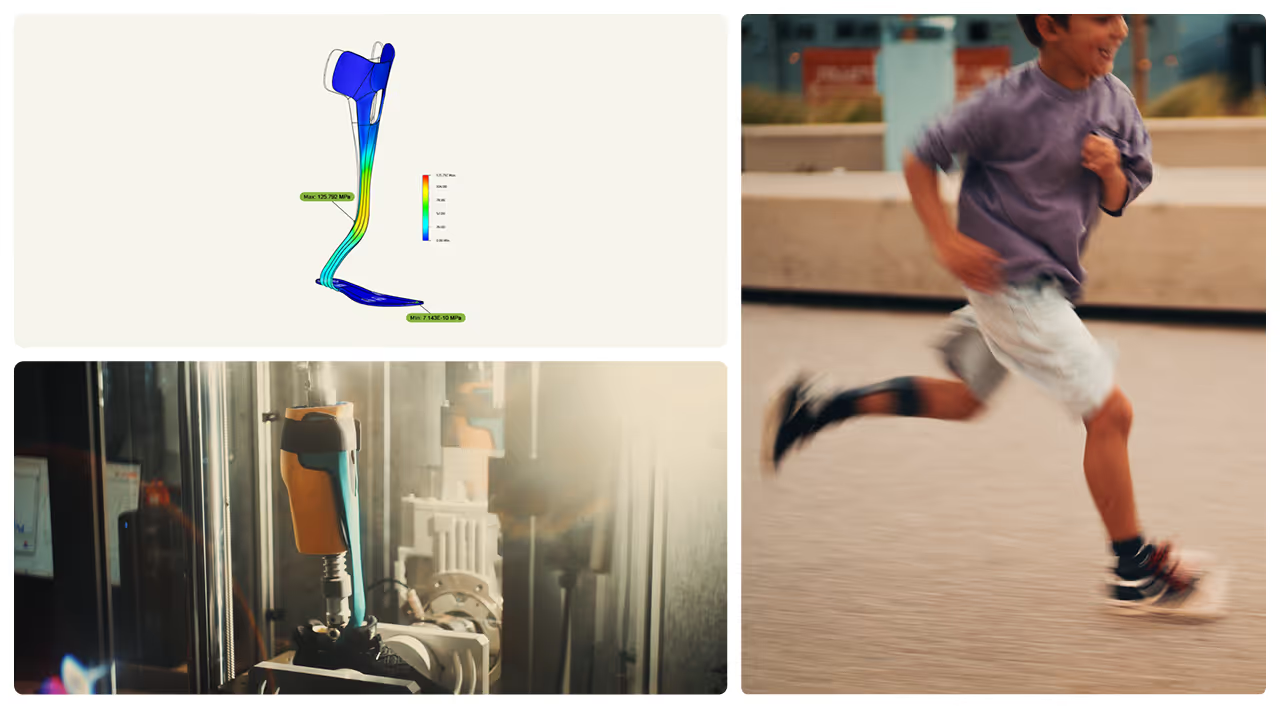
Carbon is the material of choice for many existing orthoses, and Vincent and his team initially looked at these very light and strong fibres. But they soon started looking for other materials. “Carbon is light and strong, but it is not very flexible, and we also saw in practice that carbon orthoses did not remain intact for long under the dynamic load of walking,” says Laagland. The focus shifted to composites. But which materials exactly, and what should the ratios between those materials be? To answer that question, they sought the collaboration of an expert who had worked in the automobile and extreme sport industry.
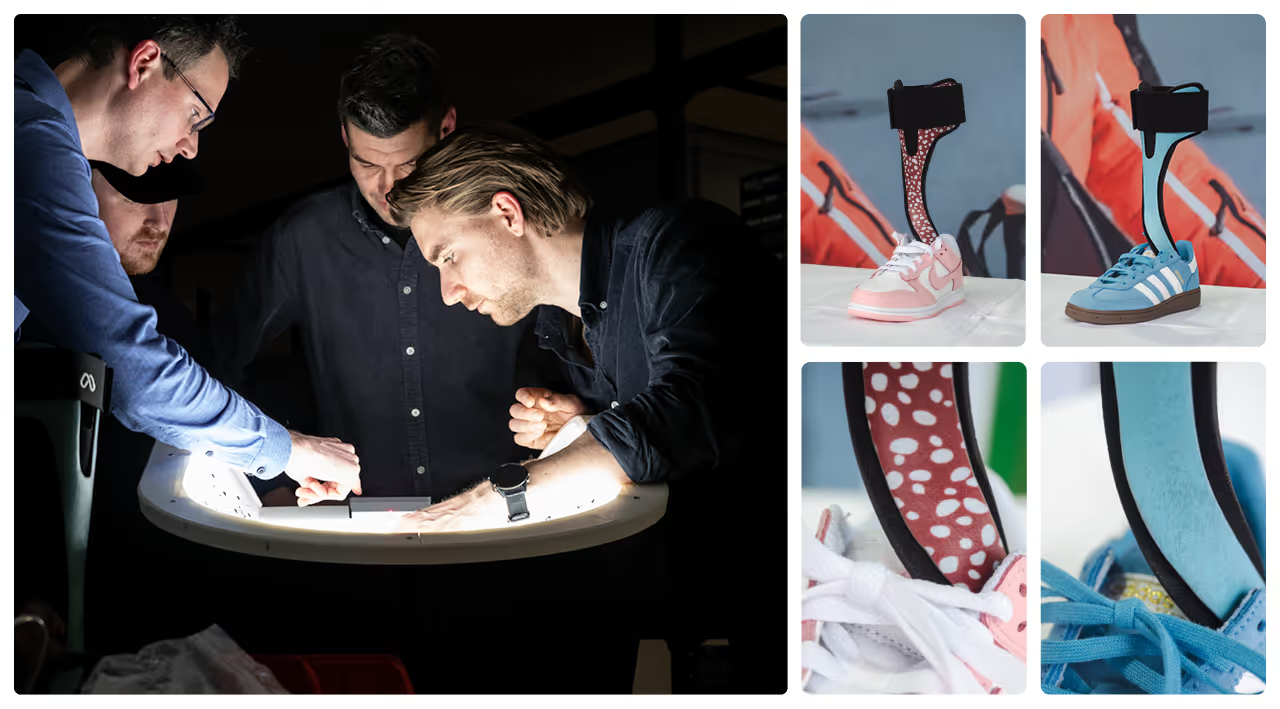
In addition to researching the material, many different designs were created for the orthosis, and a lot of hard work went into developing a completely new scanner to capture the foot and lower leg in a single scan.
{{gallery1}}
Extensive testing
In addition, the software developers collaborated with a foreign expert on an algorithm that, just like with hands, can accurately calculate exactly how an orthosis should be made. How rigid or flexible an orthosis should be along the lower leg, ankle and foot can vary enormously from patient to patient, Vincent explains, illustrating how complex a good AFO is.
This resulted in collaboration with an engineer to create a test setup to see how the orthosis would perform. The result: an orthosis can bend at least two million times without breaking. In practice, that amounts to about 2,500 kilometres of walking.
{{gallery2}}
In practice
In collaboration with five doctors at fifteen rehabilitation centres, more than a hundred people now wear the new orthosis every day and, almost without exception, they are enthusiastic about it. Just like the hand braces, each orthosis also provides new insights and data that are entered into the algorithm. This ensures that each product is a little better than the previous one.
“We are already seeing clear added value compared to existing products,” says Vincent. “They usually fit right away, weigh only a few ounces, and in most cases, people can continue to wear their regular shoes. What’s more, the orthosis is comfortable and allows for normal walking movement. Because if that’s not the case, in most cases, an orthosis will end up in the closet.”
Pride
We are incredibly proud of what we have achieved so far. Like with a Ukrainian girl who only wore her orthosis at home occasionally because she was embarrassed in front of her classmates. “So we made one for her that she could wear with her normal shoes and that fit over her trousers. I called her father a few weeks later and he told me that she now wore it over her trousers because she wanted to show it to everyone. You want children to be able to be children, but I never expected that a girl like that would also be proud of the product you made for her. Now that I have a little one myself, it means even more to me. And we’ve only just begun. I see so many opportunities to do even better.”